Microtia and Atresia
Microtia is a congenital deformity where the pinna (external ear) is underdeveloped. An undeveloped external ear canal opening is referred to as an atresia. Because microtia and atresia have the same origin, it can be referred to as microtia-atresia. Microtia can be unilateral (one side only) or bilateral (affecting both sides).
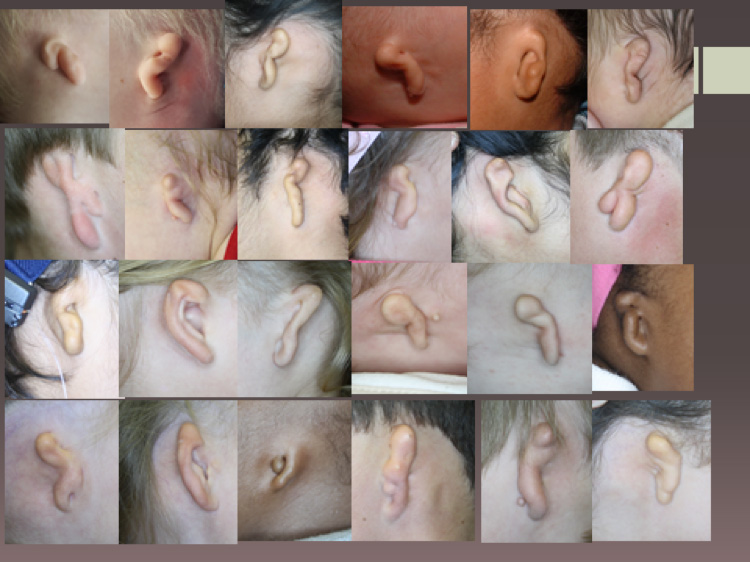
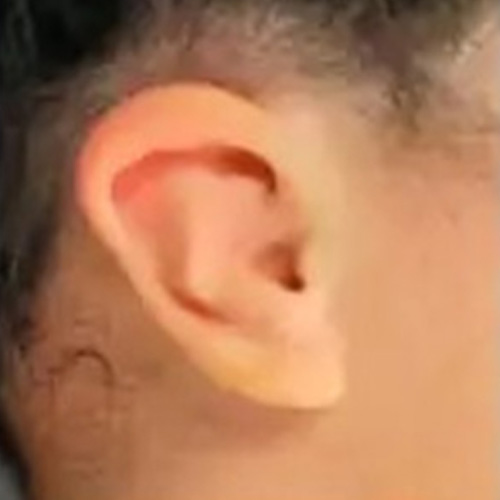
Grade 1
Smaller than usual, but the ear has mostly normal anatomy.

Grade 2
Part of the year, usually the lower half, looks normal. The canal may be normal, small, or completely closed.

Grade 3
Just a small remnant of peanut-shaped skin and cartlidge. There is no canal, which is called aural atresia.

Grade 4
Complete absence of both the external ear and the ear canal, also called anotia.
Dr. Mol works closely with Dr. Henning Frenzel, who comes out occasionally to South Africa to operate. However, twice a year, Dr. Mol goes to Germany to operate with Dr Frenzel, whose details can be found his website and Facebook page.
This partnership began in 2014 and for ten years favoured the rib cartilage technique, with very promising results. Since March 2024, Drs. Mol and Frenzel have switched to using Su-por, with promising results. The benefits of this procedure are that it is done at a day hospital, there is no need for the post-operative hospital admission, and the chest pain from the rib grafts is eliminated. The option of a 3D copy of the patient’s existing ear is also possible, although this is not currently offered at Dr. Mol’s practice in South Africa, only in Germany, and is therefore considerably more expensive.
Regarding the hearing repair of microtia patients, Dr. Mol uses three possibilities: namely, the Soundbridge, Bonebridge, and Osia as the preferred options for the hearing repair component. In some circumstances, BAHA is also used. Currently, Dr. Mol does not offer the ear canal reconstruction itself at the practice due to long-term cleaning hassles of that ear canal.
Contact Dr. Mol via email for more direct information, although a consultation with the patient is always necessary before any decisions can be made.

Prof. Henning Frenzel
